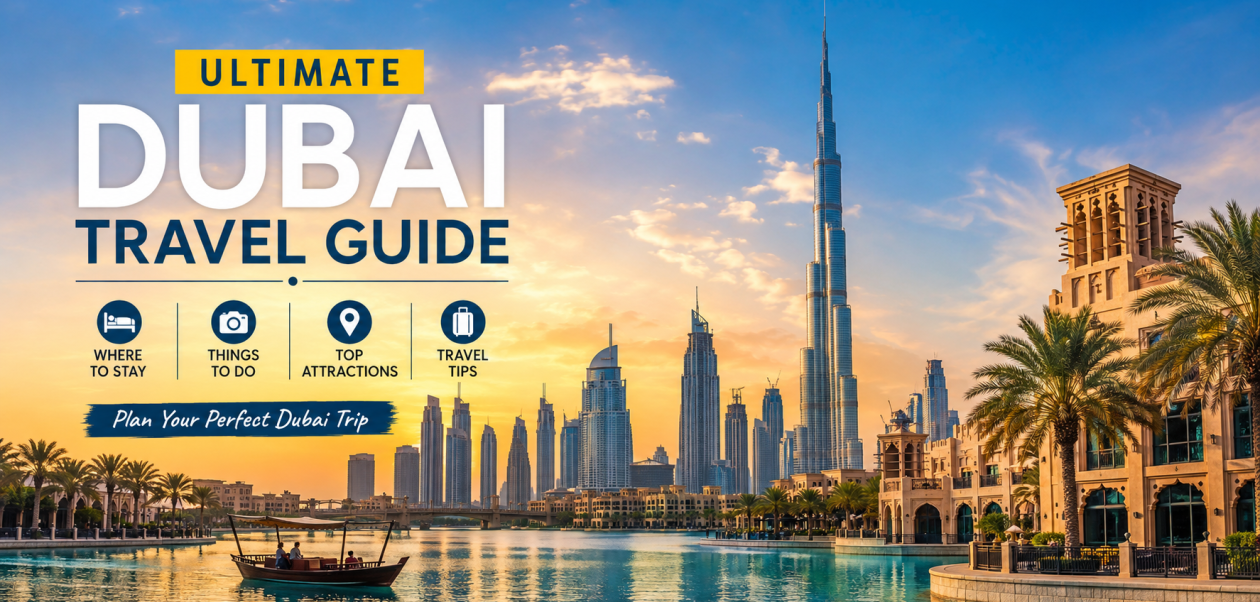
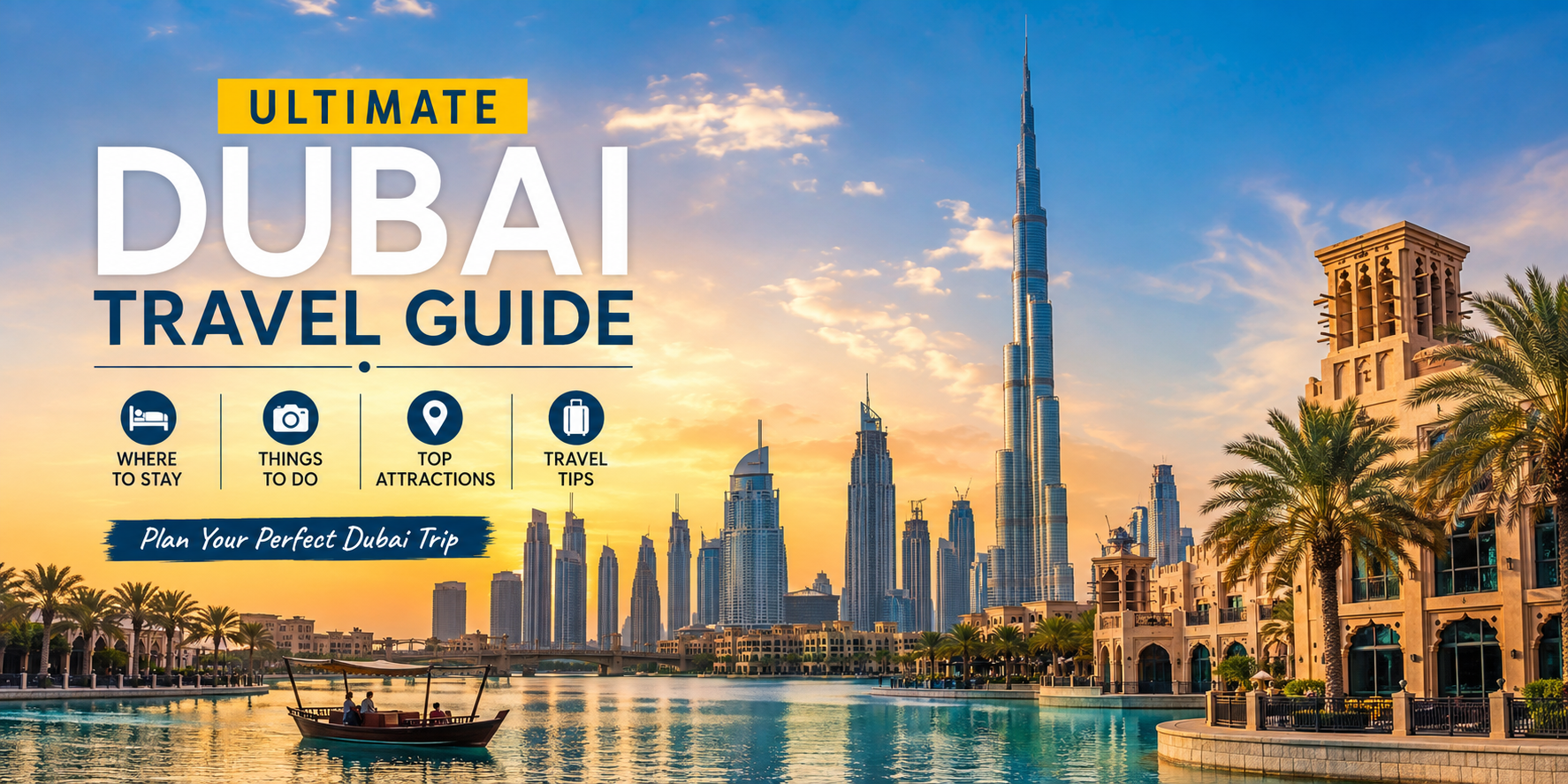
Dubai is a city built around contrasts. Glass skyscrapers rise above historic neighbourhoods, luxury resorts sit beside long sandy beaches, and traditional souks coexist with some of the world’s largest shopping malls.
For first-time visitors, that variety can make planning a trip surprisingly difficult. Dubai is spread out, attractions are often far apart, and choosing the right neighbourhood can have a major effect on both your experience and your budget.
This Dubai travel guide covers the essentials: where to stay, the best hotels, top attractions, things to do, transportation, food, costs, the best time to visit, practical travel information and tips for a smoother holiday.
Dubai’s official tourism authority also maintains current information on attractions, accommodation, transport, weather, events and travel planning.
Dubai at a Glance
| Travel Detail | Information |
| Country | United Arab Emirates |
| Currency | UAE Dirham (AED) |
| Language | Arabic; English is widely spoken |
| Time Zone | Gulf Standard Time (UTC+4) |
| Power Plug | Type G, UK-style three-pin |
| Driving Side | Right |
| Airport | Dubai International Airport (DXB) |
| Public Transport | Metro, tram, buses, taxis and water transport |
| Emergency – Police | 999 |
| Emergency – Ambulance | 998 |
| Emergency – Fire | 997 |
Dubai’s official tourism information confirms the UAE dirham as the local currency and UK-style three-pin sockets as standard. The UAE government lists 999 for police, 998 for ambulance and 997 for fire emergencies.
Why Visit Dubai?
Dubai is particularly appealing if you want a holiday that combines city sightseeing, beaches, shopping, dining, entertainment and desert adventures without having to travel between multiple destinations.
Reasons to put Dubai on your travel list
- See the world’s famous Burj Khalifa
- Explore traditional souks and historic Dubai
- Relax on Jumeirah’s beaches
- Experience a desert safari
- Shop at Dubai Mall and traditional markets
- Take a yacht cruise along the coastline
- Visit Palm Jumeirah
- Enjoy international restaurants and Middle Eastern cuisine
- Explore museums and cultural attractions
- Take a day trip to Abu Dhabi or the Hatta mountains
- Enjoy family attractions, theme parks and water parks
The city also works well for different travel styles. Couples can focus on beaches, restaurants and luxury resorts, families have an enormous choice of attractions, while budget travellers can use the Metro and stay outside the most expensive resort districts.
Where to Stay in Dubai
One of the most important decisions you’ll make is where to stay in Dubai.
The city is large, so selecting a hotel close to the attractions you actually want to visit can save considerable time.
1. Downtown Dubai – Best for First-Time Visitors
Downtown is the obvious choice if your priority is seeing Dubai’s most recognizable landmarks.
You’ll be close to:
- Burj Khalifa
- Dubai Mall
- Dubai Fountain area
- Dubai Opera
- Business Bay
- Museum of the Future, with a short taxi or Metro journey
Best for: First-time visitors, couples, sightseeing and short stays.
Downside: Hotels and restaurants around the major attractions can be expensive.
2. Dubai Marina – Best for Beaches and Nightlife
Dubai Marina has a more relaxed holiday atmosphere, with a waterfront promenade, restaurants, cafés, beach access and plenty of modern hotels.
It’s particularly attractive for travellers who want to combine sightseeing with evenings by the water.
Best for: Couples, young travellers, beach holidays and nightlife.
Downside: Downtown and Old Dubai are relatively far away.
3. Palm Jumeirah – Best for Luxury Resorts
Palm Jumeirah is Dubai’s iconic palm-shaped island and one of the city’s main resort areas.
Luxury hotels here focus heavily on beaches, swimming pools, restaurants and resort facilities. Atlantis, The Palm is one of the area’s best-known resorts, while Atlantis The Royal represents the ultra-luxury end of the market.
Best for: Luxury holidays, families, beach resorts and honeymooners.
Downside: Resort locations can mean longer journeys to Old Dubai and some central attractions.
4. Bur Dubai & Deira – Best for Budget Travellers and Culture
For a different side of Dubai, look toward Deira and Bur Dubai.
These historic districts offer easier access to traditional markets, older streets, Indian and Pakistani restaurants, textile shops and the Dubai Creek area.
Best for: Budget travellers, food lovers and visitors interested in traditional Dubai.
Downside: The atmosphere is very different from the polished resort areas around Palm Jumeirah.
5. Jumeirah – Best for Beaches
Jumeirah is a strong choice if the beach is an important part of your holiday.
You’ll find upscale residential areas, restaurants, beaches and convenient access to several major attractions.
Best for: Families, beach lovers and longer stays.
Best Hotels in Dubai
Dubai has accommodation ranging from inexpensive hotels and apartments to some of the world’s most extravagant resorts.
The city’s official tourism guide highlights accommodation across luxury, mid-range and budget categories.
| Category | Recommended Hotel | Best For |
| Luxury | Atlantis, The Palm | Families, resort holidays and luxury |
| Luxury | Atlantis The Royal | Ultra-luxury travellers |
| Mid-range | Rove Downtown | First-time visitors and value |
| Mid-range | Hyatt Place Dubai Al Rigga | Good location and practical stays |
| Budget | ibis Al Barsha | Travellers watching costs |
| Budget | Premier Inn Dubai International Airport | Short stays and airport convenience |
Luxury:
Atlantis, The Palm
A classic choice for travellers who want a full resort experience. The property combines accommodation with pools, restaurants, beach access and family attractions.
Best suited to: Families and travellers who plan to spend significant time at the resort rather than sightseeing all day.
Ultra-Luxury:
Atlantis The Royal
This is better suited to travellers who see the hotel itself as part of the holiday. Expect high-end dining, dramatic architecture and an emphasis on luxury.
Best suited to: Honeymoons, special occasions and luxury travellers.
Mid-Range:
Rove Downtown
Rove properties are known for a more contemporary, practical approach to accommodation. The Downtown location can be particularly useful for travellers who want to stay near central Dubai without paying the prices of the city’s most exclusive resorts.
Best suited to: First-time visitors, couples and independent travellers.
Budget: ibis Al Barsha
For travellers prioritising sightseeing over resort facilities, a reliable budget or economy hotel can make much more sense than paying for a private beach you’ll barely use.
Best suited to: Budget-conscious travellers and short city breaks.
Tip: Hotel prices can vary dramatically depending on dates, events and season. Always compare the total price—including taxes, resort fees where applicable and breakfast—rather than comparing the headline room rate alone.
Top Attractions in Dubai
1. Burj Khalifa
The Burj Khalifa is Dubai’s defining landmark and the obvious starting point for first-time visitors.
The observation decks provide panoramic views across Downtown Dubai, the coastline and the surrounding desert.
Travel tip: Sunset is popular, so book ahead if you specifically want an evening viewing slot.
2. Dubai Mall
Dubai Mall is much more than a shopping centre.
You can combine a visit with Downtown sightseeing and explore its huge selection of shops, restaurants and entertainment.
It is particularly convenient on extremely hot days because you can spend several hours indoors.
3. Palm Jumeirah
Even if you don’t stay on the Palm, it’s worth exploring.
Take the Palm Monorail for an elevated view of the island or visit one of the area’s beach clubs and resorts.
For photographers, sunset offers some of the most dramatic views back toward Dubai’s skyline.
4. Dubai Creek
To understand Dubai beyond the skyscrapers, spend time around Dubai Creek.
Traditional abras cross the water, while Deira and Bur Dubai preserve a connection to the city’s trading history.
This is one of the best areas for travellers who want to experience a more traditional side of the emirate.
5. Al Fahidi Historical Neighbourhood
Wander through narrow lanes, traditional architecture and restored courtyard buildings.
Pair the visit with Dubai Creek, the souks and an abra ride for a half-day focused on historic Dubai.
6. Museum of the Future
The Museum of the Future is one of Dubai’s most visually distinctive modern attractions.
The building itself is worth seeing, but the interior focuses on technology, innovation and possible future lifestyles.
7. Dubai Frame
The Dubai Frame provides a useful visual contrast between the city’s historic areas and its modern skyline.
It can be combined with visits to Old Dubai and Zabeel Park.
Best Things to Do in Dubai
Experience a Desert Safari
A desert safari is one of the experiences that genuinely adds something different to a Dubai trip.
Depending on the operator, a typical experience may include:
- 4×4 dune driving
- Sunset views
- Camel riding
- Sandboarding
- Traditional-style camp
- Dinner
- Live entertainment
For a more peaceful experience, consider a sunrise desert tour or a conservation-focused experience rather than a large evening camp.
Take a Dhow or Marina Cruise
A boat trip gives you a different perspective on Dubai’s skyline.
Options range from traditional dhow cruises around the Creek to modern dinner cruises and private yacht trips around Dubai Marina and Palm Jumeirah.
Visit the Souks
Explore the Gold Souk, Spice Souk and surrounding markets in Deira.
Don’t feel pressured to buy something simply because a vendor starts negotiating. Compare prices and check product quality before committing.
Spend a Beach Day
Popular beach areas include:
- Jumeirah Beach
- Kite Beach
- La Mer area
- Palm Jumeirah resort beaches
- JBR Beach
Public and hotel beach experiences can be quite different, so check access arrangements before travelling.
Go Shopping
Dubai is famous for shopping, from luxury fashion to electronics, souvenirs and traditional products.
Major malls are particularly useful during the hottest part of the day, while traditional souks provide a more atmospheric shopping experience.
Try Dubai’s Food Scene
Dubai’s dining scene reflects its extraordinarily international population.
Don’t limit yourself to hotel restaurants. Try local and regional favourites alongside the city’s huge selection of Indian, Pakistani, Lebanese, Iranian, Turkish and international cuisine.
Foods to try
- Shawarma
- Machboos
- Harees
- Luqaimat
- Falafel
- Hummus and mezze
- Grilled meats
- Arabic coffee
- Karak chai
For better value, explore neighbourhood restaurants outside the major luxury hotel districts.
Best Time to Visit Dubai
The most comfortable period for outdoor sightseeing is generally the cooler part of the year, particularly from November through March.
Winter brings more comfortable conditions for beaches, desert excursions, walking tours and outdoor attractions. Visit Dubai describes winter as a major season for outdoor experiences and events.
Dubai by season
| Period | What to Expect | Best For |
| Nov–Mar | Cooler and comfortable | Sightseeing, beaches, desert |
| Apr–May | Increasing heat | Short breaks, pools |
| Jun–Sep | Very hot | Indoor attractions, hotel deals |
| Oct | Heat begins easing | Mixed activities |
Summer should not automatically be ruled out. Dubai has extensive indoor attractions, air-conditioned transport and hotels with pools, and the official tourism authority actively promotes summer travel and seasonal deals.
Best overall: November to March.
Best for potentially lower hotel prices: The hottest summer months, subject to current deals and your tolerance for heat.
How to Get to Dubai
Most international visitors arrive at Dubai International Airport (DXB).
Dubai is one of the world’s major aviation hubs, with extensive connections across Europe, Asia, Africa and the Middle East.
From the airport, travellers can use:
- Dubai Metro
- Taxi
- Private airport transfer
- Hotel transfer
- Rental car
For many visitors, the Metro is the most economical option if their hotel is close to a station.
Getting Around Dubai
Dubai’s public transportation system makes it possible to travel around much of the city without renting a car.
Dubai Metro
The Metro is particularly useful for connecting areas such as Downtown, Dubai Marina and the airport.
You need a nol card to use Dubai’s public transport network. RTA currently lists Silver, Gold, Personal and Red Ticket options, with fares calculated according to zones.
A Silver nol card is the straightforward option for many tourists.
Current RTA information lists standard Silver Card fares starting at AED 3 for travel within one zone, while Red Ticket fares start at AED 4 for a one-zone journey.
Practical Metro tip
Dubai’s Metro can be excellent for major corridors, but it doesn’t reach every attraction directly. Don’t hesitate to combine the Metro with taxis for the final part of a journey.
Taxis
Taxis are convenient and widely used.
They can be especially worthwhile when travelling as a small group, carrying luggage or visiting attractions far from a Metro station.
Rental Cars
A rental car can be useful if you’re planning to explore beyond central Dubai, including areas such as Hatta or other parts of the UAE.
For a first-time city break focused on Downtown, Marina, Old Dubai and major attractions, however, a rental car is often unnecessary.
Dubai Travel Costs
Dubai can be expensive, but it doesn’t have to be.
Your biggest expenses will usually be accommodation, attractions, dining and taxis.
Approximate daily budget per person
| Travel Style | Estimated Daily Budget |
| Budget | AED 250–450 |
| Mid-range | AED 500–900 |
| Luxury | AED 1,200+ |
These are planning estimates rather than fixed prices. Hotel rates and attraction prices can change substantially by season, weekends and major events.
How to save money in Dubai
- Stay near a Metro station
- Compare hotel prices across several dates
- Eat outside major tourist malls
- Use public transport
- Look for attraction combinations and passes
- Travel during the hotter months if you tolerate heat
- Book popular attractions in advance
- Choose one or two premium experiences instead of paying for everything
Sample 5-Day Dubai Itinerary
Day 1 – Downtown Dubai
- Burj Khalifa
- Dubai Mall
- Downtown Dubai
- Evening fountain area
- Dinner with a skyline view
Day 2 – Old Dubai
- Al Fahidi Historical Neighbourhood
- Dubai Creek
- Abra ride
- Spice Souk
- Gold Souk
- Traditional Emirati or Middle Eastern dinner
Day 3 – Palm Jumeirah & Marina
- Palm Jumeirah
- Atlantis area
- Beach time
- Dubai Marina
- Marina promenade
- Sunset cruise
Day 4 – Desert Experience
- Relaxed morning
- Desert safari in the afternoon
- Sunset in the dunes
- Traditional camp dinner
Day 5 – Modern Dubai
Choose according to your interests:
Option A: Museum of the Future + Dubai Frame
Option B: Beach + shopping
Option C: Water park or family attraction
Option D: Day trip to Abu Dhabi
Dubai Travel Tips
Dress Respectfully
Dubai is modern and international, but it remains part of the UAE and visitors should respect local customs.
Beachwear is appropriate at beaches and pools, while more conservative clothing is advisable when visiting religious or traditional places.
Stay Hydrated
The heat can be intense, especially outside the cooler months.
Carry water, use sunscreen and plan outdoor sightseeing around the hottest part of the day.
Book Popular Attractions Ahead
Burj Khalifa, desert safaris, popular restaurants and major shows can sell out or become more expensive around busy periods.
Don’t Underestimate Distances
Dubai can look compact on a map, but traffic and the city’s elongated layout can make journeys longer than expected.
Group attractions by neighbourhood rather than crossing the city repeatedly.
Respect Local Laws
Avoid assuming that rules from your home country automatically apply in Dubai.
Pay particular attention to regulations concerning photography, public behaviour, alcohol and controlled substances.
When in doubt, follow local guidance and official visitor information.
Visa Information for Dubai
Visa requirements depend on your passport nationality, residency status and purpose of travel.
Some nationalities are eligible for visa-free entry or visa on arrival, while others need to arrange a tourist visa before travelling.
The UAE government states that tourist visas can be arranged through approved channels including UAE-based airlines, hotels and travel agents, depending on eligibility.
Important: Check the current requirements for your specific passport before booking non-refundable travel. Visa policies can change.
For Indian travellers, Visit Dubai maintains a dedicated guide covering visa information and other practical travel requirements.
SIM and eSIM in Dubai
A local SIM or eSIM is useful for:
- Navigation
- Ride-hailing
- Restaurant bookings
- Attraction tickets
- Hotel communication
- Translation
Before travelling, compare a UAE eSIM with local prepaid SIM options. If your phone supports eSIM, installing the plan before departure can make arrival easier.
Keep your primary SIM available if you need to receive banking or authentication messages.
Accessibility in Dubai
Dubai has invested heavily in accessible infrastructure.
The Metro, major attractions, hotels and many public facilities provide accessibility features, although the quality and layout can vary between individual properties.
Travellers with mobility, hearing or visual requirements should check individual hotels and attractions before booking rather than assuming every facility offers identical services.
Visit Dubai also provides dedicated accessibility information for travellers.
Family Travel in Dubai
Dubai is particularly well suited to family holidays.
Popular family activities include:
- Aquariums
- Water parks
- Beaches
- Desert experiences
- Dubai Mall attractions
- Theme parks
- Observation decks
- Indoor entertainment centres
Families should avoid packing too many attractions into a single day. Dubai’s heat, travel distances and queues can make an ambitious itinerary exhausting, particularly with young children.
Sustainable Travel Tips
Dubai’s scale means responsible choices can make a meaningful difference.
Consider:
- Using the Metro where practical
- Choosing hotels with recognised sustainability initiatives
- Avoiding unnecessary single-use plastics
- Supporting local restaurants and independent businesses
- Choosing desert operators that emphasise conservation
- Respecting wildlife and natural environments
- Avoiding activities that involve inappropriate treatment of animals
A sustainable trip doesn’t have to mean sacrificing comfort. Often, it simply means choosing thoughtfully.
Dubai Travel Essentials
Currency
UAE Dirham (AED/Dh).
International cards are widely accepted, but carrying a small amount of cash is useful for markets and smaller purchases.
Language
Arabic is the official language, while English is widely used in hotels, restaurants, shops and tourist attractions.
Electricity
Dubai uses Type G, UK-style three-pin plugs with a 220–240V supply.
Time Zone
Gulf Standard Time (UTC+4).
Emergency Numbers
- Police: 999
- Ambulance: 998
- Fire: 997
These numbers apply throughout the UAE.
What to Pack for Dubai
A practical Dubai packing list should include:
- Lightweight, breathable clothing
- Comfortable walking shoes
- Sunglasses
- Sunscreen
- Reusable water bottle
- Swimwear
- Light layer for heavily air-conditioned buildings
- Modest outfit for cultural or religious sites
- Universal/Type G travel adapter
- Power bank
- Prescription medication
- Copies of important travel documents
For desert excursions, sunglasses, closed shoes and sun protection are particularly useful.
Pros and Cons of Visiting Dubai
Pros
- Excellent international flight connections
- Wide choice of hotels
- Outstanding restaurants
- Efficient public transportation
- Huge range of attractions
- Excellent family facilities
- Beaches and desert experiences
- Strong luxury travel infrastructure
Cons
- Accommodation can become expensive
- Summer heat can be extreme
- Distances between attractions can be significant
- Some experiences are heavily commercialised
- Major attractions can be crowded
- Alcohol and certain behaviours are subject to local laws
Who Is Dubai Best For?
Couples
Choose Dubai Marina, Jumeirah or Palm Jumeirah for beaches, restaurants and romantic experiences.
Families
Consider Palm Jumeirah or Downtown, depending on whether you prefer resort facilities or sightseeing.
First-Time Visitors
Downtown Dubai offers the easiest access to several iconic attractions.
Budget Travellers
Look around Deira, Bur Dubai, Al Barsha and other areas with Metro access.
Luxury Travellers
Consider Palm Jumeirah, Jumeirah, Downtown and Dubai’s leading five-star resorts.
Culture Seekers
Spend more time around Al Fahidi, Dubai Creek, Deira and the historic souks rather than focusing exclusively on modern Dubai.
Final Dubai Travel Tips
The best Dubai itinerary isn’t necessarily the one with the most attractions.
Instead, organise your days geographically. Combine Downtown attractions on one day, Old Dubai on another and Palm Jumeirah and Marina together. This reduces time lost in traffic and leaves more room for enjoying the city.
For a first visit, four to five days provides a good introduction. A week is better if you want to combine major attractions with beaches, shopping, a desert safari and slower evenings.
Most importantly, don’t judge Dubai solely by its skyscrapers. The city becomes much more interesting when you combine its futuristic architecture with its Creek, souks, food culture and desert landscape.