Why Visit Japan?
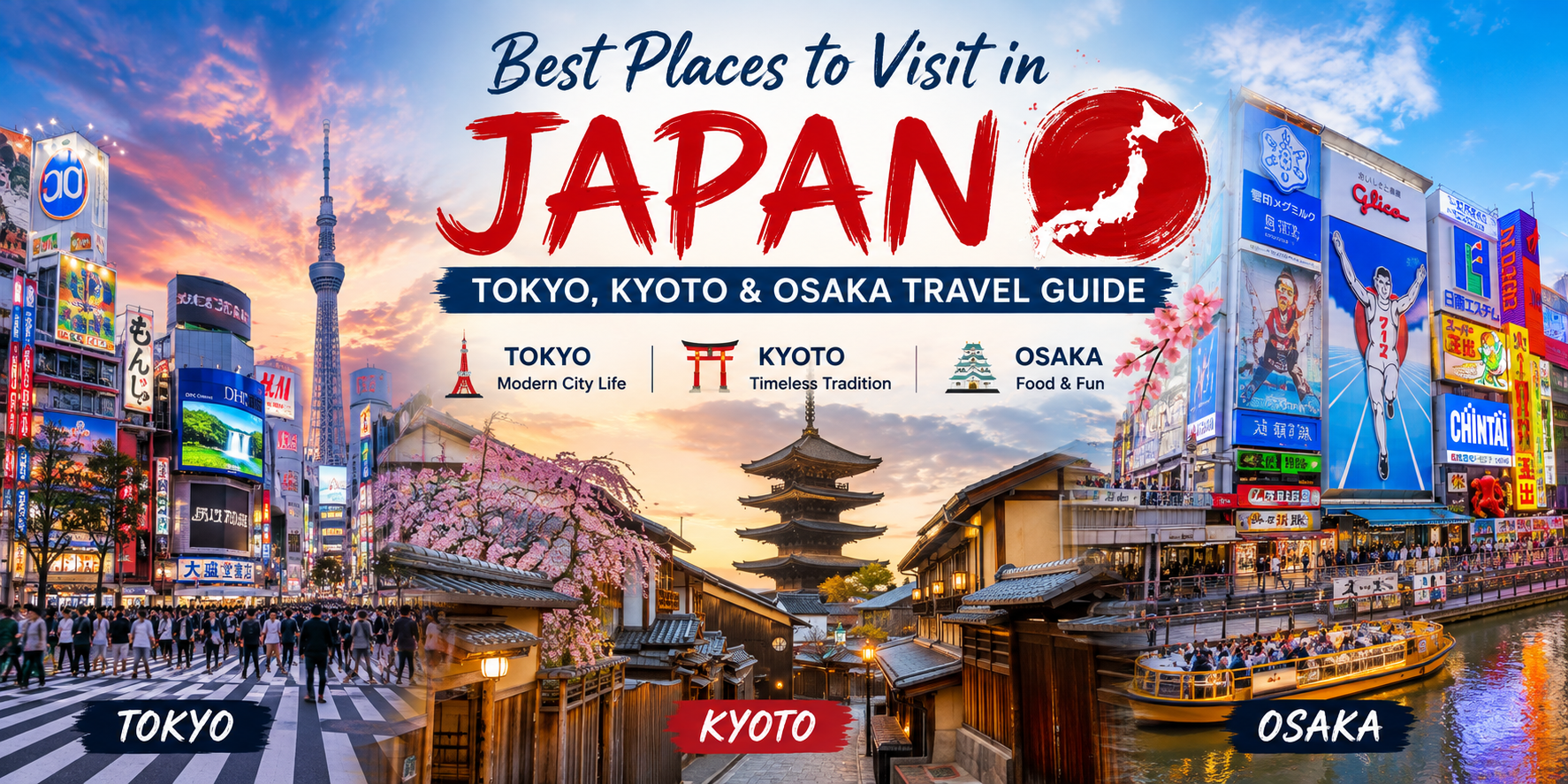
Japan combines ancient traditions with modern life in a way few destinations can match.
You can begin your morning at a centuries-old shrine, spend the afternoon riding a high-speed train and finish the evening eating ramen beneath neon signs.
Reasons to visit Japan
- Ancient temples and shrines
- Exceptional public transportation
- World-famous Japanese cuisine
- Cherry blossoms in spring
- Autumn foliage
- Mount Fuji and spectacular mountain scenery
- Traditional ryokan stays
- Onsen hot springs
- Anime, manga and gaming culture
- Historic neighbourhoods
- Modern architecture and technology
- Excellent shopping
- Unique seasonal experiences
Japan is also much larger and more diverse than the Tokyo–Kyoto–Osaka route suggests. The Japan National Tourism Organization highlights destinations ranging from Hokkaido and Tohoku to Okinawa, Kyushu and the Japanese Alps.
For a first visit, however, Tokyo, Kyoto and Osaka offer one of the most convenient introductions to the country.
Best Places to Visit in Japan
1. Tokyo – Best for First-Time Visitors
Tokyo is enormous, energetic and surprisingly diverse.
The city’s scale can initially feel overwhelming, but that is part of its appeal. One neighbourhood can feel completely different from the next.
Official Tokyo tourism information describes the city as a combination of modern skyscrapers, traditional sites, food, shopping, nightlife, culture and entertainment.
Top Things to Do in Tokyo
Shibuya Crossing
Few places represent modern Tokyo better than Shibuya Crossing.
Visit during the day for the classic city experience, then return after dark when the surrounding signs and buildings create Tokyo’s famous neon atmosphere.
Don’t rush through the area. Explore the surrounding streets, cafés, shops and department stores.
Senso-ji Temple
Located in Asakusa, Senso-ji is one of Tokyo’s most famous temples.
The approach through Nakamise-dori is lined with traditional shops selling snacks, souvenirs and crafts.
Arrive early if you want a quieter experience.
Meiji Jingu
Hidden within a large forested area near Harajuku, Meiji Jingu offers a striking contrast to Tokyo’s busy streets.
It’s an excellent place to combine with a walk through Harajuku and Omotesando.
Tokyo Skytree
For panoramic views, Tokyo Skytree provides a dramatic perspective over the enormous metropolitan area.
On clear days, visibility can extend far beyond central Tokyo.
Tokyo Metropolitan Government Building
For travellers looking for a city view without paying for one of Tokyo’s premium observation decks, the Tokyo Metropolitan Government Building is worth considering.
The official Tokyo guide continues to highlight the building as one of the city’s landmarks.
Tsukiji Outer Market
While the wholesale fish market moved to Toyosu, Tsukiji’s outer market remains a popular destination for food.
Come hungry and try sushi, tamagoyaki, grilled seafood and other Japanese snacks.
Akihabara
Anime, manga, gaming and electronics are the main attractions here.
Even travellers who aren’t dedicated fans may enjoy walking through the colourful streets and browsing the unusual shops.
Harajuku and Omotesando
Harajuku is associated with youth fashion, street culture and quirky shops, while nearby Omotesando has a more sophisticated shopping and architecture scene.
Together, they make an excellent half-day itinerary.
Where to Stay in Tokyo
Tokyo is so large that hotel location matters.
Shinjuku – Best for First-Time Visitors
Shinjuku offers excellent transportation, restaurants, shopping and nightlife.
Best for: First-time visitors, couples and travellers who want a convenient base.
Asakusa – Best for Culture and Value
Asakusa provides easier access to traditional Tokyo and can offer better value than some central business districts.
Best for: Culture lovers, families and budget-conscious travellers.
Shibuya – Best for Nightlife
Stay here if you want to be surrounded by restaurants, shops, nightlife and Tokyo’s youthful energy.
Best for: Couples, younger travellers and nightlife.
Tokyo Station – Best for Transportation
This is particularly useful if you’re planning several Shinkansen journeys.
Best for: Business travellers, luxury travellers and multi-city itineraries.
Recommended Tokyo Hotels
| Category | Hotel | Best For |
| Luxury | The Peninsula Tokyo | Luxury and central location |
| Luxury | Park Hyatt Tokyo | High-end city experience |
| Mid-range | Hotel Gracery Shinjuku | Shinjuku location and sightseeing |
| Mid-range | Mitsui Garden Hotel Kyobashi | Transport and convenience |
| Budget | Tokyu Stay Shibuya Shin-Minamiguchi | Longer stays and practical rooms |
Hotel prices in Tokyo can fluctuate significantly depending on season, weekends and events, so compare several dates before booking.
2. Kyoto – Best for Traditional Japan
If Tokyo represents Japan’s modern energy, Kyoto provides a window into its historical and cultural heritage.
Kyoto served as Japan’s imperial capital for more than a thousand years and remains one of the country’s most important cultural destinations.
The official Kyoto tourism guide describes the city as a place where history, traditional arts, hospitality and modern life continue to coexist.
Top Things to Do in Kyoto
Fushimi Inari Taisha
The famous shrine is recognised for its thousands of vermilion torii gates winding up Mount Inari.
The lower section can become extremely crowded, so arriving early is one of the best ways to enjoy the experience.
Fushimi is also known for sake breweries and historic waterways, making it worth exploring beyond the shrine itself.
Kiyomizu-dera
Kiyomizu-dera is one of Kyoto’s most iconic temples.
The surrounding Higashiyama district is filled with traditional streets, shops, restaurants and smaller temples.
The official Kyoto guide recommends the wider Gion and Kiyomizu area for its historic temples, traditional architecture and cultural atmosphere.
Gion
Gion is one of Kyoto’s most atmospheric neighbourhoods.
Traditional wooden buildings, tea houses and narrow streets create a setting that feels very different from modern Japanese cities.
Be respectful when photographing people, particularly geiko and maiko. Kyoto’s official tourism guidance specifically asks visitors not to photograph maiko without permission.
Arashiyama Bamboo Grove
Arashiyama is one of Kyoto’s most photographed areas.
The bamboo grove is beautiful, but the surrounding district deserves just as much attention.
Combine the bamboo grove with:
- Tenryu-ji Temple
- Togetsukyo Bridge
- Riverside walks
- Traditional shops
- Nearby temples
Arrive early to avoid the heaviest crowds.
Kinkaku-ji – Golden Pavilion
Kinkaku-ji is one of Kyoto’s most recognisable landmarks.
The gold-covered pavilion reflected in the surrounding pond makes it particularly photogenic.
Nishiki Market
Known as “Kyoto’s Kitchen,” Nishiki Market is an excellent place to sample local foods and snacks.
Try:
- Pickled vegetables
- Japanese sweets
- Grilled seafood
- Matcha treats
- Tofu products
- Kyoto-style snacks
Where to Stay in Kyoto
Gion/Higashiyama – Best for Atmosphere
Stay here if you want traditional streets, temples and evening walks close to your hotel.
Best for: Couples, photographers and first-time visitors.
Kyoto Station – Best for Transport
This is the practical choice if you’re planning day trips or arriving with luggage.
Best for: Families, multi-city travellers and convenience.
Downtown Kyoto – Best for Food and Shopping
The central area provides a large selection of restaurants, shops and transport connections.
Best for: Independent travellers and food lovers.
Arashiyama – Best for a Peaceful Stay
Staying in Arashiyama puts you close to temples, greenery and the bamboo grove.
Best for: Couples and travellers seeking a quieter experience.
Recommended Kyoto Hotels
| Category | Hotel | Best For |
| Luxury | The Ritz-Carlton Kyoto | Luxury and riverside setting |
| Luxury | Four Seasons Hotel Kyoto | High-end cultural escape |
| Mid-range | Hotel Granvia Kyoto | Convenience beside Kyoto Station |
| Mid-range | Cross Hotel Kyoto | Central location and modern design |
| Budget | Sotetsu Fresa Inn Kyoto-Shijokarasuma | Practical city stays |
For a traditional experience, consider staying at a ryokan rather than a conventional hotel.
A ryokan may include tatami rooms, futon bedding, Japanese meals and access to traditional bathing facilities.
3. Osaka – Best for Food and Nightlife
Osaka has a personality of its own.
It is less formal than Kyoto, more playful than Tokyo and deeply connected to food.
The official Osaka tourism guide describes the city as a major food destination, with specialties including takoyaki, okonomiyaki, kushikatsu and udon.
Top Things to Do in Osaka
Dotonbori
Dotonbori is the heart of Osaka’s entertainment district.
Giant illuminated signs, restaurants, shopping and street food create the classic Osaka atmosphere.
The official Osaka guide identifies Dotonbori as one of the city’s signature destinations and highlights its long connection with entertainment and food.
Try:
- Takoyaki
- Okonomiyaki
- Kushikatsu
- Ramen
- Crab dishes
Osaka Castle
Osaka Castle is one of the city’s most recognisable landmarks.
The surrounding park is particularly pleasant during spring when cherry blossoms are in season.
The official Osaka tourism guide lists Osaka Castle Museum and the surrounding castle park among the city’s major attractions.
Umeda Sky Building
For panoramic city views, head to the Umeda Sky Building’s observation area.
The Umeda district is also excellent for shopping and restaurants.
Shinsekai
Shinsekai offers a more old-school Osaka atmosphere.
Explore around Tsutenkaku Tower and try kushikatsu, a local speciality of skewered and fried food.
Universal Studios Japan
For families, theme-park fans and travellers interested in Nintendo, Universal Studios Japan is a major attraction.
Super Nintendo World is one of the park’s most popular experiences, although timed-entry and ticket arrangements can vary.
Check current official requirements before visiting.
Kuromon Market
Kuromon Market is a popular destination for food lovers.
It’s a good place to explore Osaka’s culinary culture and sample seafood, fruit, Japanese sweets and street food.
Where to Stay in Osaka
Namba – Best Overall
Namba puts you close to Dotonbori, restaurants, shopping and nightlife.
Best for: First-time visitors, food lovers and nightlife.
Umeda – Best for Transport
Umeda is one of Osaka’s major transportation and commercial hubs.
Best for: Business travellers, shoppers and day-trippers.
Osaka Bay – Best for Families
The bay area is convenient for Universal Studios Japan and other family attractions.
Best for: Families.
Tennoji – Best for Value
Tennoji can provide a useful balance between transportation, attractions and accommodation costs.
Best for: Budget and mid-range travellers.
Recommended Osaka Hotels
| Category | Hotel | Best For |
| Luxury | Conrad Osaka | Luxury and city views |
| Luxury | InterContinental Hotel Osaka | Umeda and high-end stays |
| Mid-range | Hotel Monterey Grasmere Osaka | Namba access |
| Mid-range | Cross Hotel Osaka | Dotonbori location |
| Budget | Sotetsu Fresa Inn Osaka-Namba | Budget-conscious travellers |
Tokyo vs Kyoto vs Osaka
| Feature | Tokyo | Kyoto | Osaka |
| Atmosphere | Energetic | Traditional | Lively |
| Best For | First-timers | Culture | Food |
| Temples | Some | Excellent | Good |
| Nightlife | Excellent | Moderate | Excellent |
| Shopping | Excellent | Good | Excellent |
| Food | Exceptional | Exceptional | Exceptional |
| Family Travel | Excellent | Excellent | Excellent |
| Luxury | Excellent | Excellent | Excellent |
| Ideal Stay | 3–4 nights | 2–3 nights | 2–3 nights |
Which city should you spend the most time in?
For a first trip, give Tokyo the most time because of its sheer size.
Kyoto deserves at least two full days, although three or four nights allow you to explore more comfortably.
Osaka can work well with two or three nights, especially if you’re also planning a day trip to Nara or Universal Studios Japan.
Best Time to Visit Japan
Japan is a year-round destination, but the experience changes dramatically with the seasons.
Spring – March to May
Spring is famous for cherry blossoms.
Tokyo, Kyoto and Osaka can become extremely busy during peak blossom periods, and exact flowering dates vary by year.
Book accommodation and major transport well in advance if cherry blossoms are your priority.
Best for: Cherry blossoms, gardens, comfortable sightseeing.
Summer – June to August
Summer is hot and humid in many parts of Japan.
The season also brings festivals, fireworks and opportunities for hiking in mountainous areas.
If visiting during summer, schedule outdoor sightseeing for mornings and evenings and stay hydrated.
Autumn – September to November
Autumn is one of Japan’s most beautiful seasons.
Kyoto is particularly famous for autumn foliage, while Tokyo and Osaka also offer colourful parks and gardens.
Best for: Comfortable sightseeing, autumn leaves and photography.
Winter – December to February
Winter brings cold weather but fewer crowds in many major cities.
It is also an excellent season for:
- Hot springs
- Skiing
- Snow scenery
- Winter illuminations
- Seasonal food
For travellers focused primarily on Tokyo, Kyoto and Osaka, winter can be an attractive value-oriented option.
How to Get Around Japan
Japan’s rail system is one of the country’s greatest travel advantages.
Shinkansen
The Shinkansen connects Tokyo, Kyoto and Osaka quickly and comfortably.
The Tokyo–Kyoto journey on the Tokaido Shinkansen takes roughly two hours and 15 minutes to two hours and 30 minutes depending on the service.
Tokyo–Osaka is similarly straightforward, with Shin-Osaka serving as the main Shinkansen station for Osaka.
Japan’s National Tourism Organization notes that the Shinkansen is one of the fastest and most convenient ways to travel around the country.
Travel Tip
When travelling from Tokyo toward Kyoto or Osaka, JNTO recommends reserving a window seat on the right-hand side for a potential view of Mount Fuji.
Should You Buy a Japan Rail Pass?
Not necessarily.
The nationwide JR Pass is useful for travellers covering significant distances, but it isn’t automatically the cheapest option for a simple Tokyo–Kyoto–Osaka itinerary.
JNTO specifically notes that travellers spending most of their time in Tokyo or Osaka may find local subway or regional passes better value.
Before purchasing a pass, compare:
- Individual Shinkansen tickets
- Regional rail passes
- Local subway passes
- The nationwide JR Pass
For a straightforward Tokyo–Kyoto–Osaka trip, calculate your actual journeys first.
Using Public Transportation in the Cities
Tokyo
Tokyo has an extensive network of:
- JR trains
- Tokyo Metro
- Toei Subway
- Private railways
- Buses
A rechargeable IC transit card can make everyday travel much easier.
Kyoto
Kyoto relies heavily on:
- Buses
- Subways
- JR trains
- Private railways
For major sightseeing areas, combining trains with walking can be more efficient than relying exclusively on buses.
Osaka
Osaka’s Metro network is particularly useful for getting around central areas.
Namba and Umeda are important transport hubs.
Japan Travel Costs
Japan can suit different budgets, but Tokyo and Kyoto accommodation can become expensive during peak periods.
Approximate daily budget per person
| Travel Style | Estimated Daily Budget |
| Budget | ¥8,000–15,000 |
| Mid-range | ¥18,000–30,000 |
| Luxury | ¥50,000+ |
These figures are broad planning estimates and can vary significantly with hotel choice, season, exchange rates and the number of paid attractions.
Ways to save money
- Stay near a train station rather than a landmark
- Eat at local restaurants and casual eateries
- Use public transportation
- Book hotels outside peak periods
- Choose business hotels for practical overnight stays
- Compare regional rail passes with individual tickets
- Visit free temples, parks and neighbourhoods
- Avoid unnecessary taxis
What to Eat in Japan
Food should be part of your Japan itinerary rather than an afterthought.
Tokyo
Try:
- Sushi
- Ramen
- Tempura
- Yakitori
- Monjayaki
- Soba
Kyoto
Look for:
- Kaiseki
- Yudofu
- Obanzai
- Matcha sweets
- Kyoto-style sushi
- Wagashi
Osaka
Don’t leave without trying:
- Takoyaki
- Okonomiyaki
- Kushikatsu
- Udon
- Negiyaki
Osaka’s official tourism authority describes the city as a historic “Kitchen of the Nation” with a strong food culture built around dishes such as takoyaki, okonomiyaki, kushikatsu and udon.
Japanese Food Etiquette
A few simple rules make dining easier.
Chopsticks
Avoid:
- Sticking chopsticks upright in rice
- Passing food directly from chopsticks to chopsticks
- Playing with chopsticks
Restaurants
Some small restaurants may have limited English menus or ordering systems.
Photos, translation apps and simple phrases can help.
Tipping
Tipping is generally not expected in Japan.
In fact, leaving money behind can sometimes cause confusion.
Japanese Customs Travelers Should Know
Keep Your Voice Down on Trains
Public transportation is generally quiet.
Avoid loud conversations and phone calls while travelling.
Queue Properly
Japanese transport systems are highly organised. Follow markings and wait your turn.
Remove Shoes When Required
Shoes are commonly removed before entering certain homes, traditional accommodations, temples and other spaces.
Look for signs or follow your host’s instructions.
Don’t Litter
Public bins can be surprisingly difficult to find in some areas.
Carry a small bag for rubbish until you find an appropriate disposal point.
Respect Temples and Shrines
Follow posted rules concerning photography, access and behaviour.
Japan Travel Tips for First-Time Visitors
1. Don’t Try to See Everything
Japan is much larger than Tokyo, Kyoto and Osaka.
Trying to add too many destinations can turn your holiday into a transportation marathon.
2. Group Attractions by Area
Tokyo and Kyoto are particularly large.
Plan each day around one or two neighbourhoods instead of repeatedly crossing the city.
3. Book Popular Experiences Early
Reserve ahead for:
- Popular restaurants
- High-demand hotels
- Shinkansen journeys during busy periods
- Theme parks
- Special seasonal experiences
4. Start Early
Popular attractions can become crowded quickly.
Early mornings are particularly valuable at Fushimi Inari, Arashiyama and major Tokyo landmarks.
5. Carry a Small Amount of Cash
Cards are widely accepted, but some smaller restaurants, shops and attractions may still prefer cash.
6. Use Luggage Delivery
Japan has excellent luggage-forwarding services.
If travelling between Tokyo, Kyoto and Osaka, sending large suitcases ahead can make train journeys considerably easier.
SIM and eSIM Advice
A Japanese SIM or eSIM is highly recommended.
It makes it easier to use:
- Google Maps
- Translation apps
- Train navigation
- Restaurant searches
- Ride-hailing
- Digital tickets
If your phone supports eSIM, consider installing the plan before departure so you have connectivity immediately after landing.
Visa and Entry Information
Visa requirements depend on your passport and nationality.
Some travellers can enter Japan visa-free for short stays, while others must obtain a visa before departure.
Japan’s official Ministry of Foreign Affairs provides the current list of visa-exempt countries and visa procedures.
Always check the requirements for your own passport before booking your trip, as entry rules can change.
Travellers from India can also consult the Japan National Tourism Organization’s India website, which provides India-specific travel and visa information.
Where to Go Beyond Tokyo, Kyoto and Osaka
If you have more than 10–12 days, consider extending your itinerary.
Mount Fuji
An obvious addition from Tokyo.
Popular viewpoints include the Fuji Five Lakes region and Hakone.
Nara
Easy to visit from Kyoto or Osaka.
Highlights include:
- Todai-ji
- Nara Park
- Kasuga Taisha
- Free-roaming deer
Hiroshima
Add Hiroshima if you have additional time.
Visit the Peace Memorial Park and consider a side trip to Miyajima.
Hakone
Excellent for hot springs, mountain scenery and potential Mount Fuji views.
Kanazawa
A strong choice for travellers interested in traditional architecture, gardens, crafts and Japanese culture without the scale of Kyoto.
Hokkaido
Visit for a completely different side of Japan, particularly for nature, skiing, seafood and summer landscapes.
Suggested 7-Day Japan Itinerary
A week is short, but you can still experience the highlights.
Day 1 – Tokyo
- Shibuya
- Harajuku
- Meiji Jingu
- Shibuya at night
Day 2 – Tokyo
- Asakusa
- Senso-ji
- Tokyo Skytree
- Akihabara
Day 3 – Tokyo
- Tsukiji
- Ginza
- Tokyo Station
- Shinjuku
Day 4 – Tokyo to Kyoto
Take the Shinkansen to Kyoto.
Spend the afternoon exploring:
- Gion
- Higashiyama
- Kiyomizu-dera
Day 5 – Kyoto
- Fushimi Inari
- Nishiki Market
- Kinkaku-ji
- Gion
Day 6 – Kyoto to Osaka
Travel to Osaka.
Explore:
- Osaka Castle
- Dotonbori
- Namba
Day 7 – Osaka
Choose between:
- Universal Studios Japan
- Kuromon Market
- Umeda
- Shinsekai
Recommended 10-Day Japan Itinerary
For a more relaxed first trip:
| Day | Destination | Highlights |
| 1 | Tokyo | Shibuya, Harajuku |
| 2 | Tokyo | Asakusa, Skytree |
| 3 | Tokyo | Shinjuku, Ginza |
| 4 | Tokyo | Flexible/day trip |
| 5 | Kyoto | Gion, Kiyomizu |
| 6 | Kyoto | Fushimi Inari, Arashiyama |
| 7 | Kyoto | Kinkaku-ji, Nishiki |
| 8 | Osaka | Osaka Castle, Namba |
| 9 | Osaka | Dotonbori, Umeda |
| 10 | Osaka | Universal Studios or Nara |
Best Japan Itinerary for Couples
Couples can slow the pace slightly.
Tokyo
Stay in Shibuya or Ginza.
Enjoy:
- Rooftop views
- Fine dining
- Cocktail bars
- Private food tours
- Evening neighbourhood walks
Kyoto
Spend more time around:
- Gion
- Higashiyama
- Arashiyama
Consider a ryokan stay.
Osaka
Stay around Namba and explore the city’s restaurants and nightlife together.
Best Japan Itinerary for Families
Families may prefer slightly longer stays in each city.
Tokyo
Prioritise:
- Tokyo Disneyland or DisneySea
- Tokyo Skytree
- Asakusa
- TeamLab experiences
- Ueno
- Akihabara
Kyoto
Choose:
- Fushimi Inari
- Arashiyama
- Kinkaku-ji
- Family-friendly cultural experiences
Osaka
Spend time at:
- Universal Studios Japan
- Osaka Aquarium Kaiyukan
- Dotonbori
- Osaka Castle
Pros and Cons of Visiting Japan
Pros
- Excellent transportation
- Outstanding food
- Very safe for tourists
- Unique culture
- Efficient cities
- Beautiful seasonal scenery
- Huge variety of accommodation
- Excellent shopping
- Strong infrastructure for families
Cons
- Popular destinations can be crowded
- Tokyo and Kyoto accommodation can be expensive
- Peak cherry blossom season is particularly busy
- Language barriers can occasionally arise
- Long-distance travel can add up
- Summer heat and humidity can be uncomfortable
Japan Travel Essentials
Currency
Japanese Yen (JPY/¥).
Language
Japanese.
English is common in major tourist areas, hotels and transportation hubs, but not every restaurant or smaller business will have extensive English support.
Electricity
Japan primarily uses Type A and Type B plugs.
The standard voltage is generally 100V.
Travellers should check whether their devices support Japan’s voltage before plugging them in.
Time Zone
Japan Standard Time (UTC+9).
Japan does not observe daylight saving time.
Emergency Numbers
- Police: 110
- Ambulance: 119
- Fire: 119
Sustainable Travel in Japan
Japan’s popular destinations are experiencing significant visitor demand.
Travellers can reduce their impact by:
- Using public transportation
- Carrying reusable bottles
- Avoiding litter
- Respecting residential areas
- Following temple and shrine rules
- Staying on marked paths
- Supporting local restaurants and independent businesses
- Travelling outside the busiest periods where possible
- Exploring lesser-known neighbourhoods
Kyoto’s official tourism authority particularly emphasises responsible travel and preserving the city’s cultural heritage for future generations.
Accessibility in Japan
Japan’s major cities generally provide strong accessibility infrastructure, particularly on newer train stations and major tourist routes.
However, older temples, traditional buildings and narrow historic streets can present challenges.
Travellers with accessibility requirements should check individual hotels, stations and attractions before travelling.
For Tokyo, the official tourism authority provides accessibility and tourist information resources, including visitor information centres.
How Much Time Do You Need in Japan?
5–7 Days
Choose:
Tokyo + Kyoto
Add Osaka only if you’re comfortable moving quickly.
8–10 Days
Choose:
Tokyo + Kyoto + Osaka
This is the ideal first-trip combination for many travellers.
12–14 Days
Add:
- Nara
- Hakone
- Mount Fuji
- Hiroshima
- Kanazawa
3 Weeks or More
Consider travelling beyond the classic Golden Route into:
- Hokkaido
- Tohoku
- Japanese Alps
- Kyushu
- Okinawa
Final Verdict: Where Should You Go in Japan?
For first-time visitors, Tokyo, Kyoto and Osaka are an excellent combination.
Tokyo is the place for modern Japan: skyscrapers, shopping, anime, nightlife and an almost endless selection of restaurants.
Kyoto is where you’ll find the country’s most famous traditional landscapes, temples, gardens and historic neighbourhoods.
Osaka brings a more relaxed and energetic atmosphere, with some of Japan’s best casual food, shopping and nightlife.
If you have 7 days, focus on Tokyo and Kyoto with a short Osaka visit.
With 9–10 days, give each city enough time to breathe.
And if you have two weeks or more, go beyond the Golden Route. Add Mount Fuji, Hakone, Nara, Hiroshima or another region that matches your interests.
The biggest mistake is trying to see all of Japan at once. Instead, choose a manageable route, travel slowly enough to enjoy it and leave some room for the unexpected—a tiny ramen shop, a quiet shrine, a neighbourhood café or a train journey through the countryside.
That’s often where the most memorable parts of Japan begin.